



Housing affordability has become one of the defining economic issues across Canada and much of North America. For households, it affects where people can live, how much they can save, whether they can build equity, and how exposed they are to financial stress. For governments, it shapes labour mobility, social stability, productivity, and long term growth. For investors, it changes the logic of underwriting, financing, asset selection, and expected returns.
Table Of Content
- Why Housing Affordability Is More Complex Than It Appears
- The Core Economic Variables That Shape Housing Affordability
- Income Growth and Household Purchasing Power
- Interest Rates and the Cost of Borrowing
- Housing Supply and Vacancy Rates
- Construction Costs, Land, and Local Regulation
- Ownership Affordability, Rental Affordability, and Housing Adequacy
- The Policy Dimension: Why No Single Fix Will Solve Affordability
- Why Housing Supply Is Central, but Not Sufficient on Its Own
- The Personal Finance Side of Housing Affordability
- Practical Steps for Buyers and Owners
- What Housing Affordability Means for Real Estate Investors
- Common Misconceptions About Housing Affordability
- Canada and the Broader North American Context
- What Practical Solutions Look Like
- Final Perspective
The central challenge is that housing affordability is not simply a price problem. It is a systems problem. Home prices matter, but so do wages, mortgage rates, rent levels, taxes, insurance premiums, maintenance costs, local regulations, construction timelines, and the pace of new supply. A market can feel unaffordable even when prices flatten if borrowing costs remain high. A city can add units and still struggle if household formation, immigration, and employment growth continue to outpace supply.
In Canada, the issue is especially visible because affordability pressures now span ownership, rental housing, and the broader question of housing adequacy. Statistics Canada has reported that 64.4% of households were spending less than 30% of income on shelter costs, a benchmark long used in Canadian housing analysis. Yet that figure also implies that a substantial share of households are under meaningful pressure, and federal and international sources point to deeper structural concerns. Around 1.7 million Canadian households were in core housing need in 2022, with affordability as the primary issue for most of them.
This article examines the core drivers of housing affordability through a real estate economics lens. It explores how supply shortages, interest rates, mortgage renewal risk, construction costs, regulation, and policy choices interact. It also outlines practical steps individuals can take to navigate a difficult market and shows why disciplined analysis matters more than ever for buyers, renters, and investors.
Key takeaway: Housing affordability should be evaluated through three distinct lenses: ownership affordability, rental affordability, and housing adequacy. Each responds to different pressures and requires different solutions.
Why Housing Affordability Is More Complex Than It Appears
Public discussion often reduces affordability to a single question: are home prices too high? That framing is understandable, but incomplete. The true monthly cost of housing includes mortgage payments or rent, property taxes, utilities, insurance, maintenance, condominium fees where relevant, and transportation tradeoffs linked to location. A home that appears cheaper in a distant market may impose higher commuting and lifestyle costs. A property that looks manageable at one interest rate may become difficult at renewal.
That is why the familiar 30% shelter cost to income threshold is useful but limited. It offers a consistent benchmark and remains deeply embedded in Canadian housing policy and social housing frameworks. At the same time, it does not fully capture differences in household size, child care obligations, local transport costs, quality of housing, or whether a family is sacrificing savings and resilience to stay below the threshold. Affordability is not just about current payment ability. It is also about whether a household can sustain that payment while absorbing shocks.
The OECD offers another helpful lens by focusing on direct housing related spending as a share of disposable income. In Canada, that absorbed 19.3% of median disposable income in 2022. That statistic helps compare countries, but it also underscores a broader point: affordability is about cash flow capacity, not simply sticker price. If wage growth lags while financing costs rise, households can lose purchasing power quickly, even in a stable market.
In practice, affordability means asking several questions at once. Can a household qualify? Can it carry the monthly cost? Can it handle interest rate changes or income interruptions? Can it live in a location that supports work and family needs? And if the answer is no, is the problem a shortage of supply, a financing barrier, insufficient income growth, or some combination of all three?
The Core Economic Variables That Shape Housing Affordability
Income Growth and Household Purchasing Power
Housing affordability begins with income. When wages rise steadily and broadly, households can absorb some increase in rents, mortgage payments, or operating costs. When income growth is weak or concentrated among higher earners, affordability deteriorates quickly for middle income and lower income households. This is one reason affordability can worsen even in periods where headline home price growth slows.
Purchasing power also depends on job stability. Households with variable income, contract work, or uncertain employment tend to face tighter underwriting conditions and often need larger cash reserves. In volatile labour markets, flexibility becomes part of affordability. A family may technically qualify for a home, but if the margin is thin, that purchase can still create risk rather than security.
Regional labour dynamics matter as well. High demand urban centres often offer stronger wages, but those gains can be offset by much higher housing costs. As a result, affordability is best understood as a local equation linking income opportunity to total shelter costs. That explains why strong economic regions can still feel deeply unaffordable.
Interest Rates and the Cost of Borrowing
Interest rates are one of the fastest moving drivers of affordability. A modest increase in rates can materially reduce purchasing power because buyers qualify on monthly payment capacity, not on price alone. In a high rate environment, even flat home prices may not restore affordability if the payment burden remains elevated. That is why recent affordability discussions have shifted from home values to total monthly payment burden.
This effect is especially important in Canada, where the Bank of Canada has noted that about 60% of outstanding mortgages will renew in 2025 or 2026. Many of those borrowers originated loans in a lower rate environment and may face payment increases when terms reset. Stress tests have improved resilience, but they do not remove the reality of tighter cash flow. Renewal risk can pressure household budgets even when owners are not moving or buying new property.
The same pattern is visible in the United States. High house prices and elevated borrowing costs have kept ownership affordability under strain. Harvard’s 2025 housing report noted that home prices and interest rates had pushed sales to their lowest level in 30 years. This is a critical reminder that affordability can break down through financing conditions just as easily as through rapid appreciation.

Housing Supply and Vacancy Rates
Supply is the structural side of the equation. When a region consistently fails to add enough housing relative to population growth, household formation, and job concentration, prices and rents rise over time. Canada’s supply challenge has been quantified clearly by CMHC, which has estimated that restoring affordability would require about 3.5 million additional housing units by 2030 under its baseline scenario. That is not a cyclical shortage. It is a significant structural gap.
Low vacancy rates magnify the pressure in the rental market. When renters have few alternatives, landlords gain pricing power and mobility declines. This creates a difficult cycle because high rents make it harder for households to save for down payments, while high ownership costs keep more people in the rental pool. The result is a two sided affordability squeeze that affects both aspiring buyers and long term renters.
Supply shortages also create sharper regional affordability gradients. Large metropolitan areas with limited land, restrictive zoning, long permitting timelines, and heavy infrastructure demands tend to experience the greatest pressure. Smaller markets may look relatively affordable at first, but if migration and investor demand accelerate without matching new construction, those markets can tighten rapidly as well.
Construction Costs, Land, and Local Regulation
Even when demand is strong, housing cannot be delivered quickly or cheaply if the economics of building are weak. Construction costs, labour availability, development charges, financing expenses, land prices, and approval delays all influence whether projects move forward. High rates affect developers too, not just homebuyers. If project financing becomes expensive and margins narrow, fewer units get built, which prolongs the affordability problem.
Regulation matters because it determines how fast supply can respond. Zoning restrictions, parking minimums, approval complexity, and uncertain timelines can reduce supply elasticity. In plain terms, they make it harder for the market to add homes where people most want to live. Reforming these constraints does not create overnight affordability, but it improves the medium term capacity of cities to respond to demand.
That is why current policy debates increasingly focus on density, permitting speed, infrastructure coordination, and purpose built rental incentives. A functioning housing market requires not just land and capital, but also a planning system that allows production at meaningful scale.
Ownership Affordability, Rental Affordability, and Housing Adequacy
One of the most important distinctions in housing analysis is that affordability is not a single category. Ownership affordability asks whether households can buy and sustain the cost of a home. Rental affordability asks whether households can access stable rental housing without excessive financial strain. Housing adequacy asks whether the available housing is suitable in size, condition, safety, and location. These dimensions overlap, but they are not identical.
A city can have a cooling ownership market while rental affordability worsens. This happens when high rates suppress homebuying and keep more households renting, while low vacancy rates allow rents to continue rising. Similarly, a household may spend less than 30% of income on shelter and still live in overcrowded or poor quality conditions. The affordability benchmark alone cannot capture all of that.
Core housing need is useful because it broadens the analysis. It incorporates affordability, suitability, and adequacy, and it helps identify households whose housing situation falls materially below acceptable standards. In Canada, the fact that roughly 1.7 million households were in core housing need highlights how affordability challenges extend beyond market transactions into social and structural issues.
For investors and policymakers, this distinction matters because solutions differ. Ownership affordability may respond to financing conditions, supply expansion, and income growth. Rental affordability may require more purpose built rental housing, preservation of lower cost stock, and targeted support. Housing adequacy may require renovation, social housing, accessibility improvements, and neighbourhood investment.
The Policy Dimension: Why No Single Fix Will Solve Affordability
Housing affordability often invites simple political promises, but the economics resist simple fixes. Public institutions can influence supply, financing, tenant protections, tax settings, infrastructure coordination, and social housing investment. However, no one policy can solve a problem rooted in multiple systems. CMHC and the OECD have both emphasized that meaningful improvement requires a mix of supply side expansion, demand management, and targeted supports.
In Canada, recent policy attention has focused on rental construction support, housing data, preservation tools such as the Rental Protection Fund, and broader efforts to accelerate supply. These are important because they acknowledge that preserving lower cost homes is as necessary as building new ones. If older rental stock is lost to redevelopment without replacement, affordability can worsen despite new supply at higher price points.
Zoning reform is another major area of debate. Allowing more density near transit, employment hubs, and established neighbourhoods can improve long term supply responsiveness. Yet zoning reform alone is not enough if municipalities lack infrastructure capacity or if development economics remain weak. Faster approvals help, but projects still need viable financing, labour, and servicing.
Targeted supports also play a role. Lower income households are often least helped by broad price moderation because even a somewhat cheaper market may still be unaffordable. This is where non market housing, rental assistance, and social housing policy remain important. Affordability at the margin for middle income households is not the same as affordability for vulnerable households with limited income flexibility.
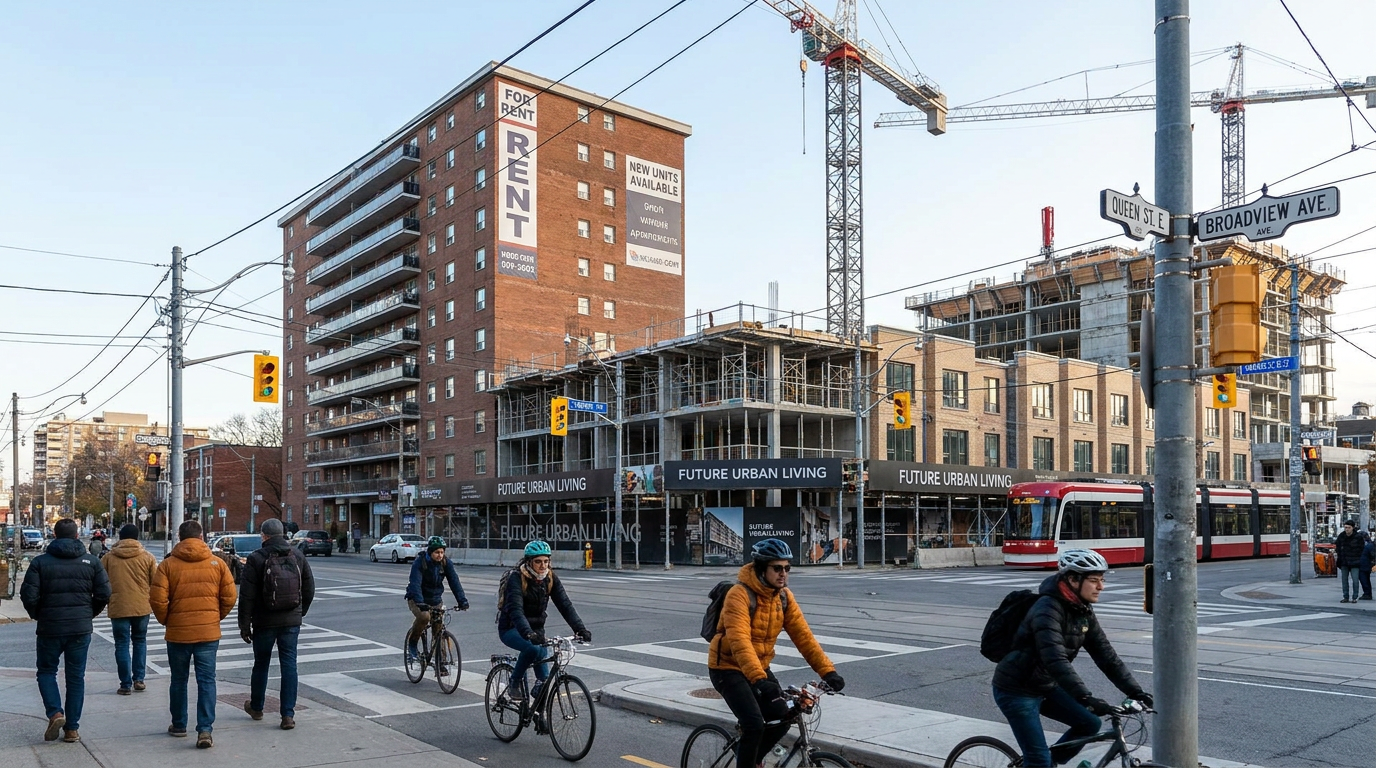
Why Housing Supply Is Central, but Not Sufficient on Its Own
Supply is central because persistent shortages push both prices and rents upward over time. When CMHC estimates that Canada needs millions of additional units to restore affordability, the message is clear: current production is not aligned with demand. Markets with constrained supply tend to produce bidding pressure in ownership and low vacancy pressure in rental housing. Over time, these conditions harden into a structural affordability problem.
Still, supply should not be treated as a magic answer. New housing often takes years to approve, finance, and complete. It may also enter the market at price points above what lower income households can afford. In addition, if infrastructure, schools, transit, and services do not expand with housing, new supply can face political and logistical resistance. The challenge is not just quantity. It is the right quantity, in the right locations, with the right mix of tenures and price points.
Purpose built rental housing deserves special attention here. For years, insufficient rental development in many Canadian cities contributed to low vacancy and rent escalation. A healthier rental market requires more dedicated rental stock, not just condominium completions that may or may not enter the rental pool. Purpose built rental can provide stability, scale, and longer term operating discipline that fragmented investor ownership often cannot match.
Preservation is equally important. The most affordable homes in many markets are older units, smaller buildings, and modest properties that already exist. If those units are renovated upward or removed without replacement, the affordable segment shrinks. Effective affordability strategy therefore includes both building more and protecting existing lower cost stock.
The Personal Finance Side of Housing Affordability
For households, the current environment rewards realism over optimism. The right question is no longer just, “Can I buy?” It is, “Can I buy without compromising liquidity, resilience, and future flexibility?” That shift matters because many affordability problems emerge after the purchase, when maintenance, taxes, insurance, and rate resets start to pressure cash flow.
One of the most effective strategies is to conduct a personal stress test beyond lender requirements. Households should model mortgage payments at a rate higher than current offers, estimate property taxes conservatively, include utility variability, and reserve for maintenance. This process is not pessimism. It is prudent underwriting. The households most exposed in difficult periods are often those who purchased based on best case assumptions.
Renting versus buying should also be evaluated on a total cost basis. Buying can build equity and provide long term control, but it also introduces transaction costs, maintenance risk, and financing sensitivity. Renting may look expensive, yet in some high cost markets it can preserve liquidity and flexibility, especially if ownership costs far exceed equivalent rent. The answer depends on time horizon, job stability, mobility needs, and local market pricing.
Emergency reserves have become more important as affordability tightens. A larger cash buffer helps households absorb renewal shocks, temporary income disruption, or major repair costs without relying on high cost debt. In an era of mortgage renewal risk and uncertain economic conditions, liquidity is part of affordability.
Practical Steps for Buyers and Owners
-
Model all-in monthly costs. Include mortgage payments, taxes, insurance, utilities, maintenance, condo fees if applicable, and a reserve for irregular repairs. The purchase price is only one line in the affordability equation.
-
Stress test renewal scenarios. If you are buying today or renewing soon, model payments at higher rates and ask what happens to your budget if that scenario becomes reality. Renewal risk is now a mainstream issue, not a remote one.
-
Prioritize down payment strategy carefully. A larger down payment can improve monthly affordability and reduce interest cost, but it should not eliminate your emergency reserve. Strong liquidity after closing matters.
-
Compare location tradeoffs honestly. Lower purchase prices farther from work may raise commuting costs, time burdens, and lifestyle strain. Affordability should include geography, not just mortgage qualification.
-
Think in holding periods, not headlines. Short term market noise matters less if the asset and financing are sustainable over a long horizon. Housing decisions built around speculation are much less resilient than those built around durable cash flow.
What Housing Affordability Means for Real Estate Investors
Housing affordability influences investor behavior in direct and indirect ways. Directly, it affects achievable rents, tenant quality, occupancy, and financing risk. Indirectly, it shapes policy pressure, tax debates, public sentiment, and the future supply pipeline. In today’s market, the investment lesson is straightforward: cash flow discipline matters more than speculative appreciation.
When rates are high and cap rates remain relatively compressed, underwriting errors become expensive. Investors need to be conservative on rent growth assumptions, realistic on operating costs, and disciplined on debt structure. Deals that only work under aggressive appreciation scenarios are vulnerable. The stronger opportunities are often those where rental demand is durable, supply additions are measured, and financing can be carried comfortably through rate variability.
Affordability stress can also influence tenant behavior. In tight rental markets, demand may remain strong, but household budgets become more fragile. This can increase sensitivity to lease renewals, utility costs, and unit quality. Investors who focus on stable, well located, professionally managed housing may outperform those who rely solely on price escalation.
There is also a strategic distinction between investing in affordability pressure and investing in affordability solutions. Markets with severe shortages can support strong rent growth, but they also face greater policy scrutiny and tenant stress. Assets tied to purpose built rental, missing middle housing, and practical family oriented formats may align better with long term structural demand than luxury segments dependent on narrower buyer pools.

Common Misconceptions About Housing Affordability
Several misconceptions continue to distort affordability discussions. The first is that affordability is determined by home prices alone. In reality, rates, taxes, insurance, maintenance, and income all matter. Two households looking at the same property can face very different affordability outcomes depending on financing structure and cash reserves.
The second misconception is that if home prices stop rising, affordability must be improving. That is not necessarily true. If borrowing costs remain elevated or incomes stall, the monthly burden can stay high. Affordability can therefore remain strained in a flat price environment.
The third misconception is that building more homes should solve the issue quickly. More supply is essential, but delivery takes time. Also, not every new unit reaches the households under the most acute pressure. Supply expansion works best when paired with policy that supports rental housing, infrastructure, preservation, and targeted affordability measures.
The fourth misconception is that renters and owners experience the same market. They do not. Ownership affordability is heavily influenced by financing conditions and down payment barriers. Rental affordability is more exposed to vacancy rates, local supply of purpose built rentals, and tenant income pressures. A balanced analysis must separate the two.
Canada and the Broader North American Context
Although this discussion is grounded primarily in Canada, the broader North American pattern is similar. Across many major metropolitan areas, affordability is under pressure because high prices collided with higher borrowing costs after years of undersupply. In the United States, FHFA data continue to show home prices that remain high by historical standards, reinforcing the burden created by elevated mortgage rates. Canada faces this same pressure, with the added complexity of acute supply shortages in several major urban corridors.
The key difference is often structure rather than direction. Canada’s mortgage renewal cycle makes payment resets a central issue for existing homeowners. The United States has a larger share of long duration fixed mortgages, which can insulate incumbent owners but also reduce mobility because households are reluctant to trade low legacy rates for much higher current ones. In both systems, affordability becomes less about listing prices and more about how financing conditions interact with household budgets.
This is why affordability should be treated as a strategic macro issue rather than just a housing market story. If workers cannot live near jobs, productivity suffers. If younger households are locked out of ownership and burdened by rent, consumption, savings, and family formation can change. If developers cannot produce housing profitably under current constraints, shortages persist. The effects extend well beyond real estate.
What Practical Solutions Look Like
Practical solutions start with accepting that there is no single lever. A credible affordability strategy combines faster and more predictable approvals, better zoning flexibility, stronger infrastructure alignment, more purpose built rental development, preservation of lower cost stock, and targeted assistance for households under the greatest strain. That is a systems approach to a systems problem.
At the household level, practical solutions mean disciplined budgeting, larger reserves, more realistic purchase criteria, and a willingness to compare renting and buying without ideology. For some households, the best move may be to buy smaller, buy later, or buy in a different submarket. For others, renting strategically while preserving capital may be the stronger financial decision. The objective is not to force ownership at any cost. It is to improve long term financial position.
For investors, practical solutions mean investing with operational discipline and long term perspective. Assets that rely on stable demand, sustainable financing, and realistic expense assumptions are better positioned than those built on hope. In a market shaped by affordability pressure, prudent underwriting is not defensive. It is competitive.
For policymakers, practical solutions require balance. Supply growth is indispensable, but it must be supported by financing capacity, construction economics, and local implementation. Tenant protection matters, but so does maintaining incentives to build and preserve rental stock. Affordability policy works best when it addresses near term pain without undermining long term supply creation.
Final Perspective
Housing affordability is one of the clearest examples of how macroeconomics, policy, and personal finance intersect. It is influenced by interest rates, wages, supply shortages, regulation, rental dynamics, and household balance sheets. That complexity can be frustrating, but it also provides a better roadmap for solutions. The market does not need simpler slogans. It needs sharper analysis.
In Canada, the numbers tell a clear story. Millions of additional homes are needed to restore affordability. A significant share of households remain outside the traditional shelter cost benchmark. Core housing need is still affecting roughly 1.7 million households. And mortgage renewals in 2025 and 2026 will keep payment pressure in focus even for existing owners. These are not isolated indicators. Together, they show a housing system under sustained strain.
The good news is that households and investors are not powerless within that system. Better underwriting, stronger reserves, careful location analysis, and realistic time horizons can improve decision quality materially. Affordability may be constrained, but strategy still matters. In difficult markets, disciplined decisions often create the strongest long term outcomes.
Ultimately, understanding housing affordability means seeing the full picture. It is not just about what a home costs today. It is about what a household, a city, and an economy can sustain over time. That is the framework that matters most for buyers, renters, investors, and policymakers alike.


No Comment! Be the first one.