IBM’s Almaden Site Is a Test Case for Silicon Valley’s Next Land Strategy
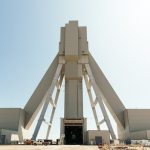
The pending sale of IBM’s Almaden Research Center in South San Jose is not just another corporate real estate disposition. It is a rare Silicon Valley land event where institutional legacy, open space preservation, industrial zoning, and future employment uses all meet on one 687-acre property. As reported by The Mercury News, the site includes 544,500 square feet of research and development space on roughly 35 acres, surrounded by 652 acres of hillside open space.
For developers and long-term land investors, the significance is in the split personality of the asset. The built portion has immediate operational value as an office, laboratory, research, or advanced technology campus. The larger landholding has strategic value of a different kind. It is not likely a conventional development reserve. It is a political, environmental, and community-sensitive open space asset that will shape how any buyer is judged by San Jose, conservation groups, and surrounding neighbourhoods.
The zoning move now under review is the real signal. An investment group is seeking to align the property’s zoning with its current general plan designations, shifting 35 acres to industrial park and 652 acres to open space. That is not an aggressive upzoning play. It is a feasibility clarification. By separating the employment land from the conservation land, the future owner can reduce entitlement ambiguity and create a cleaner framework for acquisition, financing, reuse, or repositioning.

That matters because large-scale Silicon Valley land is increasingly constrained by infrastructure, environmental policy, housing pressure, and public skepticism toward isolated campus models. A buyer looking at Almaden is not simply pricing buildings and acreage. They are underwriting access, utility capacity, commute patterns, entitlement risk, adaptive reuse costs, and the likelihood that civic stakeholders will support a future plan.
The site also reflects a broader shift in corporate land demand. IBM’s decision to consolidate workers at its Silicon Valley Lab near Coyote Valley shows how legacy campuses are being reevaluated. The strongest users today want flexibility, energy resilience, specialized facilities, and proximity to talent. Older R&D campuses can still compete, but only if their physical plant, mobility context, and operating costs match the next generation of technical work.
The value of Almaden will be determined less by how much land is owned, and more by how clearly each acre is allowed to function.
Housing is the absent but unavoidable backdrop. South San Jose and the broader Silicon Valley market remain under pressure to deliver supply, yet this site is not positioned as a simple housing conversion. Its employment designation, hillside context, access constraints, and open space sensitivity make large residential redevelopment unlikely without a major policy fight. That does not mean housing demand is irrelevant. It means job location decisions here still affect regional commute patterns, infrastructure load, and pressure on nearby communities.
The most viable path may be a hybrid public-private outcome: preserve the open space permanently, stabilize the industrial park zoning, and market the built campus to an owner-user or specialized investor capable of absorbing a large R&D footprint. Conservation partnerships could become part of the transaction structure, not a post-closing obligation. In markets like this, entitlement certainty and civic alignment can be as valuable as density.
Developers should watch how San Jose handles the rezoning, how conservation agencies respond, and whether the buyer pool is dominated by users, investors, or land bankers. Almaden is a reminder that the next phase of Silicon Valley growth will not be measured only by what gets built. It will be measured by how intelligently scarce developable land is separated from land that should remain untouched.
Source: The Mercury News