



Understanding Rental Analytics: Tools and Trends for Smart Investment
As the real estate landscape evolves rapidly, both landlords and tenants must adapt to a new paradigm defined by data and technology. Rental analytics has emerged as a pivotal tool that sits at the intersection of data science and real estate, bringing together various forms of data — from government statistics to market intelligence. This article delves into the intricacies of rental analytics, explaining how data-driven insights can empower informed decision-making for all stakeholders in the rental market.
Table Of Content
What is Rental Analytics?
Rental analytics involves using data to assess various aspects of the rental market, enabling landlords, investors, lenders, and tenants to make informed decisions. In essence, it harnesses the power of big data to optimize yields, forecast outcomes, and manage risk in North America’s rental markets. The core of rental analytics lies in understanding several key metrics that reflect market realities, and as this field grows, the tools and technologies available to analyze this data are becoming increasingly sophisticated.
In the context of rental properties, these analytics provide a robust framework for evaluating performance, benchmarking against peers, and understanding market dynamics. Whether it’s evaluating trends in rent prices or analyzing vacancy rates, rental analytics equips users with the insights necessary for achieving their financial goals.
Key Metrics in Rental Analytics
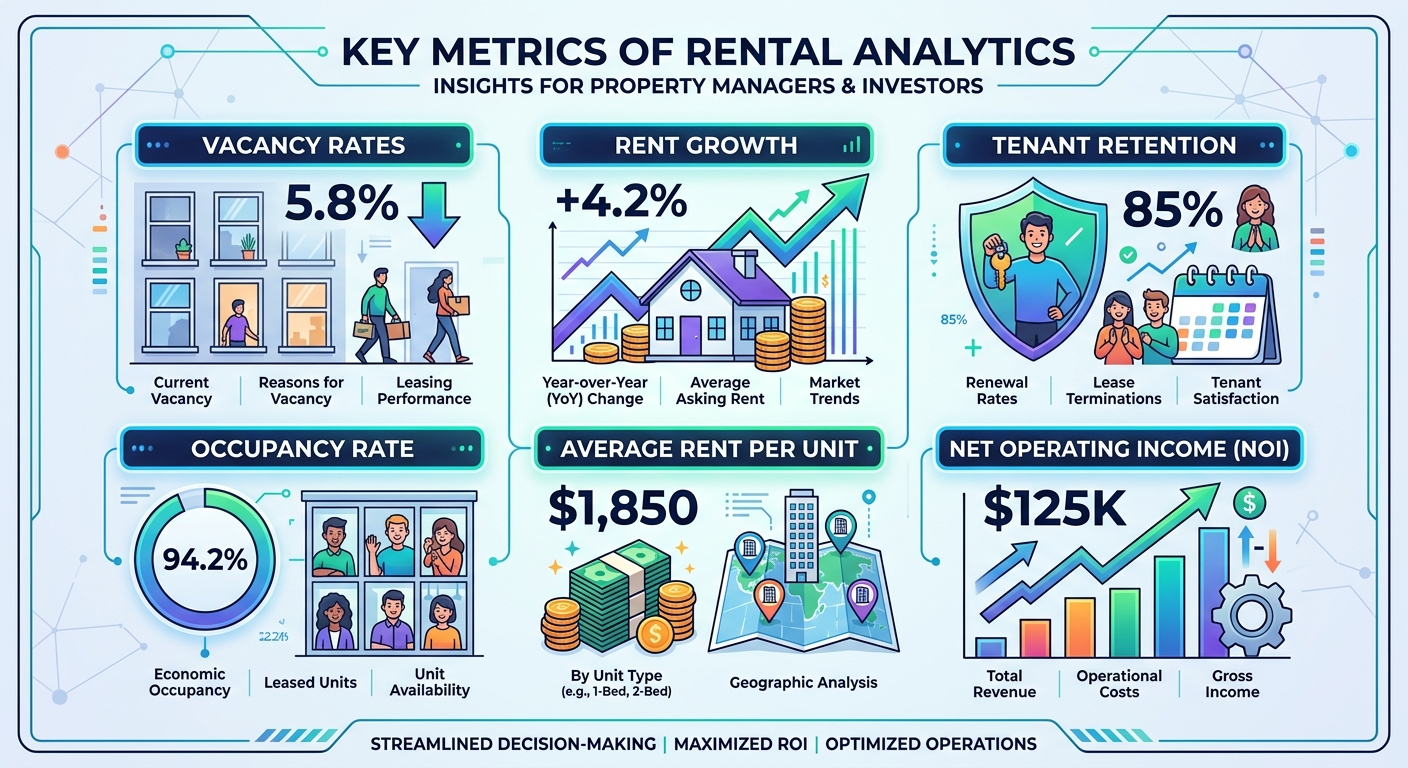
Understanding the key metrics that underpin rental analytics is essential for anyone involved in the rental market. Among the most critical metrics are:
Vacancy Rates
Vacancy rates indicate the percentage of rental units that are currently unoccupied. A high vacancy rate can signify a surplus of rental units or a decrease in demand, which impacts landlords’ ability to maintain rent levels. Conversely, a low vacancy rate often suggests a competitive rental market, allowing landlords to increase pricing strategically.
Turnover
Turnover refers to the frequency at which tenants leave and new tenants move into a unit. Understanding turnover rates is crucial for landlords as they need to account for the costs associated with finding new tenants, any renovations that may be necessary, and the periods during which units sit vacant.
Rent Growth
This metric tracks the annual percentage increase in rent prices within a specific market. For instance, Zillow reports that the typical asking rent in March 2026 was $1,910, reflecting a year-over-year increase of 1.8% — the slowest pace since 2020. Analyzing rent growth helps landlords and investors forecast potential earnings while enabling tenants to understand the cost of living trends in their desired areas.
Concessions
Concessions refer to incentives offered to tenants, such as reduced rent for the first month or waiving application fees. An increasing trend in concessions can indicate a softening rental market or an oversupply of rentals, compelling landlords to create attractive offers to fill vacant units.
Rent-to-Income Ratios
This ratio provides insight into how affordable a rental property is to prospective tenants. Typically, a rent-to-income ratio greater than 30% indicates a tenant is cost-burdened, meaning they spend a significant chunk of their income on housing. Understanding this metric aids landlords in pricing their units competitively while ensuring affordability for their tenants.
According to Harvard’s 2026 report, a significant portion of households remains cost-burdened despite stabilizing rent prices, emphasizing the importance of these metrics for both landlords and tenants.
Tools and Technologies to Harness Rental Analytics
As the rental analytics landscape continues to evolve, an array of tools and technologies have emerged to help stakeholders harness data effectively. Today, many platforms integrate both public and private data sources to offer comprehensive insights into rental markets.
One notable player is Mashvisor, which provides advanced analytics tools to assess investment properties. Introduced in 2026, the AI-powered MashGPT enables users to pose natural-language questions about factors such as rental performance, occupancy rates, and cap rates across various U.S. markets. This democratization of data allows even novice investors to understand complex rental dynamics.
RealPage is another industry leader serving over 24 million rental units, offering invaluable pricing analytics and occupancy data tools that shape landlord strategies. With the ability to leverage real-time data, landlords can optimize their pricing and increase profitability.
Zillow’s ZORI and Redfin’s rental trackers further illustrate how rental trends and concessions manifest across markets, serving as vital signals for various stakeholders to inform their underwriting and portfolio management decisions.
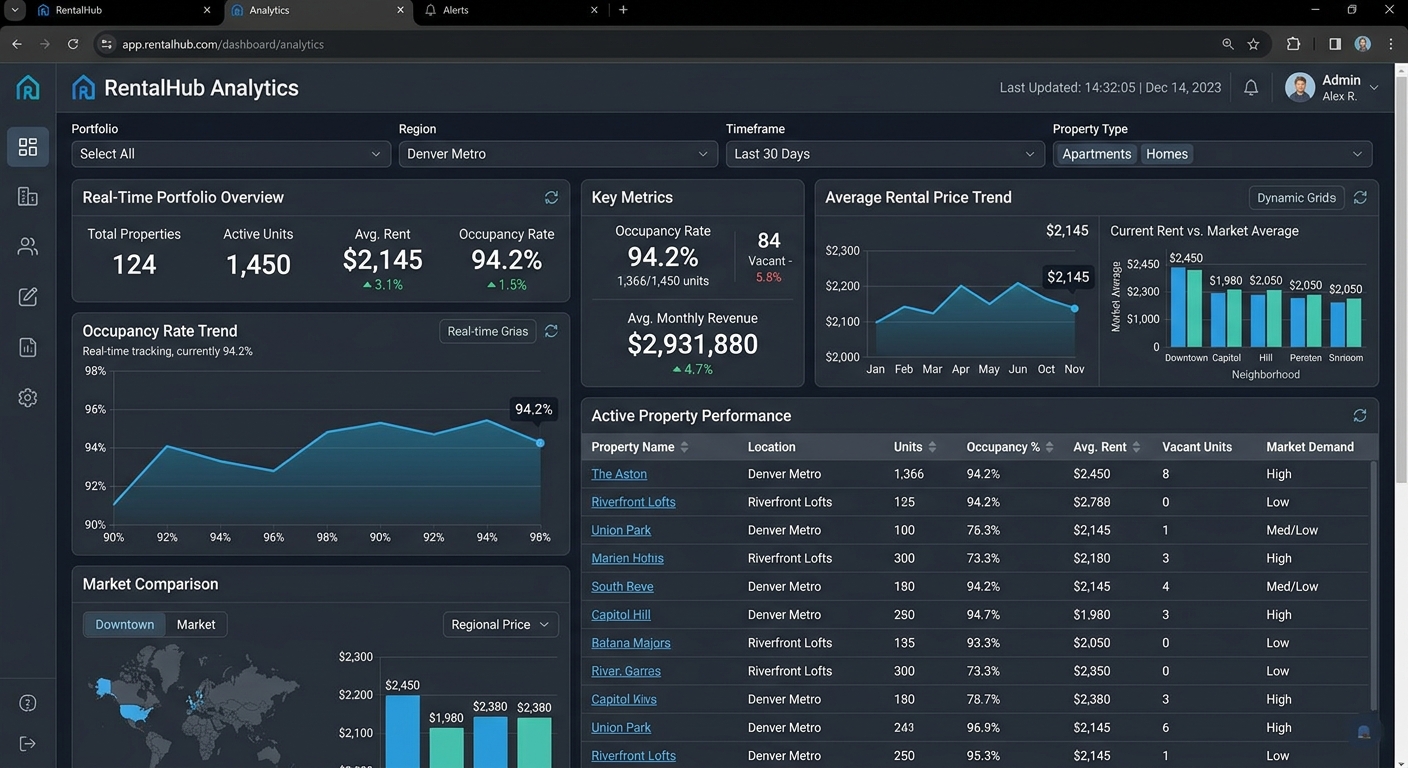
Furthermore, dashboards that provide real-time analytics are becoming an essential component for understanding the rental landscape. These smart dashboards aggregate multiple data streams into a single interface, enabling users to track performance and identify trends efficiently. With these tools, landlords can make data-driven decisions that significantly enhance their investment strategies.
Future Trends in the Rental Market
The rental market is undergoing transformative changes, heavily influenced by advancements in technology and data analytics. Notably, AI-enabled tools that process large data feeds into actionable insights are determining the trajectory of rental analytics. For instance, the integration of AI in platforms like MashGPT is streamlining processes that once required considerable manual effort.
Moreover, the market is experiencing regulatory shifts, evidenced by U.S. antitrust actions against pricing software such as RealPage, highlighting the evolving policy environment surrounding rental data. These regulatory challenges will likely shape how landlords approach pricing strategies and data utilization, particularly as they navigate a landscape where competition is increasingly fierce.
Additionally, leading organizations like CoStar and Apartments.com are offering forecasts that suggest a gradual rebalancing of rent growth and vacancy rates as supply adjusts to meet shifts in demand. As the market stabilizes, stakeholders must remain vigilant, continuously reviewing data to adapt their strategies accordingly.
However, despite indicators suggesting cooling rent growth, challenges related to affordability persist. In Canada, for example, the national average vacancy rate for purpose-built rentals reached 3.1% in 2025, with markets like Toronto showing similar trends. The CMHC mid-year report noted declining advertised rents across several major cities due to rising listings and changing demand dynamics. Understanding these shifts will be key for landlords aiming to maintain competitiveness while providing affordable housing options.
Ultimately, the future of rental analytics lies in its ability to balance yield with tenant stability and housing security. As data informs decision-making processes, both landlords and tenants will benefit from a more transparent rental landscape that effectively addresses current challenges.
Conclusion
In conclusion, understanding rental analytics is no longer optional for landlords, investors, and even tenants; it’s a critical component of navigating the complexities of the rental market. As technology continues to intersect with real estate, the ability to leverage data insights will define success for many stakeholders, allowing them to make informed decisions that reflect market realities.
By exploring key metrics, embracing advanced tools, and looking forward to emerging trends, individuals and organizations involved in renting properties can position themselves strategically within a fluctuating market. Ultimately, the synergy between data-driven insights and strategic decision-making will pave the way for smarter investments and healthier tenant relationships. As we move further into a data-centric era, embracing rental analytics is the foundation upon which future successes in the rental market will be built.



No Comment! Be the first one.